person · draft
Jay W. Forrester
American engineer and MIT professor (1918 to 2016) who founded system dynamics and used it to model a firm, a city and the whole world.
Jay Wright Forrester was born in Nebraska on 14 July 1918 and died on 16 November 2016, aged 98.1,2 He spent his whole career at MIT, arriving as a graduate student in 1939 and retiring in 1989.1,2 After the war he led Project Whirlwind, one of the first digital computers, and in 1949 invented magnetic core memory, an early form of RAM.1,2
In 1956 he moved to what became the MIT Sloan School of Management and turned to the behaviour of organisations.1,2 There he developed system dynamics, which describes a system as stocks that rise and fall through flows and feedback loops, and simulates it on a computer.1,2 His book Industrial Dynamics (1961) used it to show that swings in a firm's inventory came from its own management practices, not from the market.1,2 He also created the supply-chain exercise later known as the Beer Game.2
He then applied the method to a city in Urban Dynamics (1969) and to the planet in World Dynamics (1971), an integrated model of population, resources and economic growth.1,2 World Dynamics was the starting point for the World3 model of The Limits to Growth, written in 1972 by four of his students.1,2 His 1971 paper Counterintuitive Behavior of Social Systems argued that computer models of social systems expose the assumptions that people leave unstated in debate.1
On the wiki, Incrementalism and complexity dates his system dynamics to the 1950s, and the System Dynamics Society award named after him appears in the entry on Stella Architect.
- affiliation
- MIT Sloan School of Management
- role
- founder of system dynamics
makes
-
Jay Forrester's 1969 system-dynamics model of a city as feedback loops among population, housing and industry, the first computer model to simulate a whole city's life cycle.
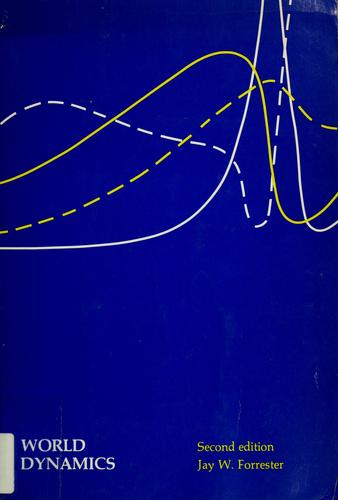
Jay Forrester's 1971 system-dynamics model of the world as one system of population, capital, food, resources and pollution; the model behind The Limits to Growth.
Tags: system dynamics, feedback, world model