person · draft
Karen Willcox
Computational engineer who directs the Oden Institute at UT Austin; works on reduced-order and multifidelity models and the mathematical foundations of digital twins.
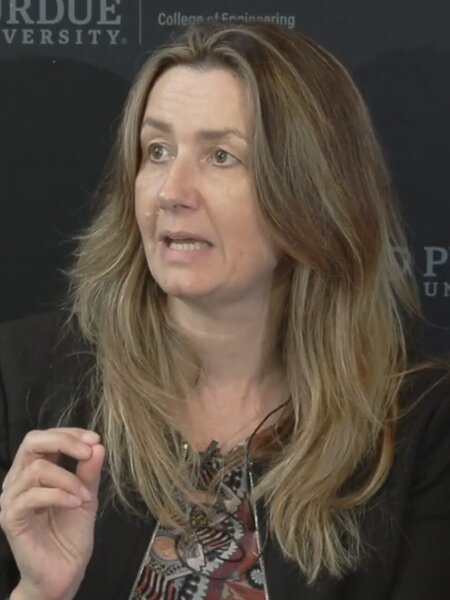
Purdue Engineering, Wikimedia Commons, CC BY 3.0.
Karen E. Willcox is Director of the Oden Institute for Computational Engineering and Sciences, Associate Vice President for Research and Professor of Aerospace Engineering and Engineering Mechanics at the University of Texas at Austin.1 She is also an External Professor and Science Board member at the Santa Fe Institute.2 She grew up in New Zealand and took her engineering degree at the University of Auckland and her master's and PhD at MIT.1,3 After a spell at Boeing Phantom Works she spent 17 years as a professor at MIT, where she was founding co-director of the Center for Computational Engineering, and moved to Texas in 2018.1
Her reduced-order models learn physics-based approximations from data, so that a simulation runs in minutes instead of days.1,2 Her multifidelity methods combine several sources of information for decisions and uncertainty quantification, and she works on scalable methods for predictive digital twins.1 Her methods have gone into industry and government codes for aircraft design and for environmental policy decisions, and she has applied them with domain experts to settings from rocket engines to community college pathways and cancer tumour modelling.1,2 She was elected to the National Academy of Engineering in 2022.1
She chaired the National Academies committee behind Foundational Research Gaps and Future Directions for Digital Twins. She was one of the organisers of the SFI working group Digital Twins for Complex Systems: Theory and Algorithms, and SFI's story Building better digital twins quotes her on trust.
- affiliation
- Oden Institute for Computational Engineering and Sciences, University of Texas at Austin
- role
- computational engineer
- homepage
- https://oden.utexas.edu/people/directory/Karen-Willcox/
belongs to this organization or group
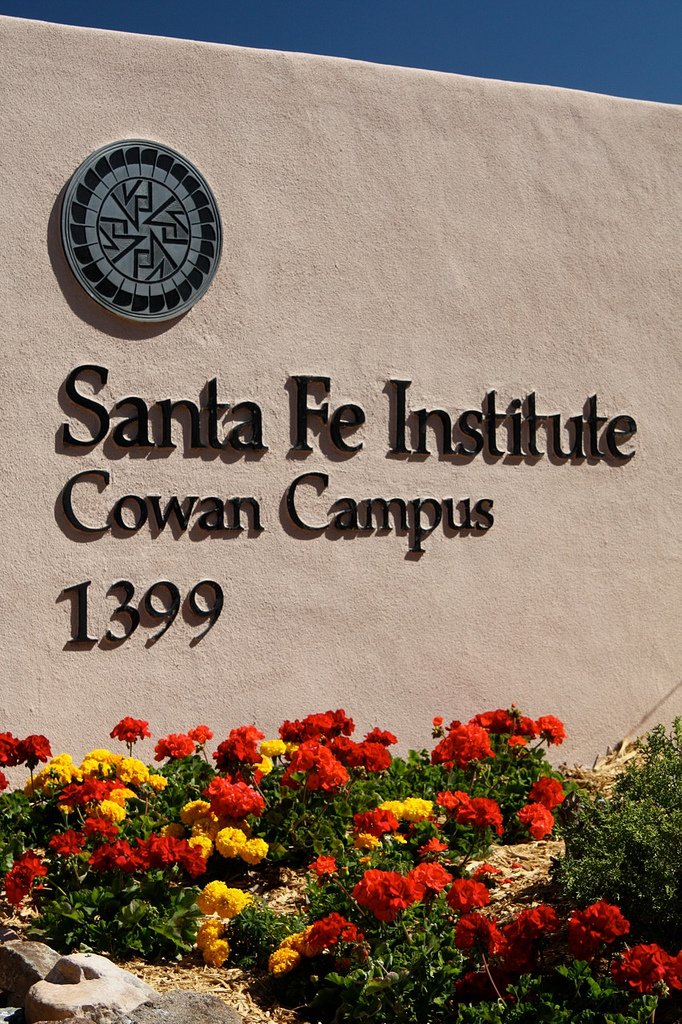
Nonprofit centre in Santa Fe, New Mexico, founded in 1984 to study complex systems; its free Complexity Explorer courses teach agent-based modelling and scaling.
Tags: reduced-order models, uncertainty quantification, digital twins