person · draft
Michael Batty
British urban modeller, Bartlett Professor of Planning at UCL and chair of CASA, whose books set out the bottom-up, complexity view of cities.
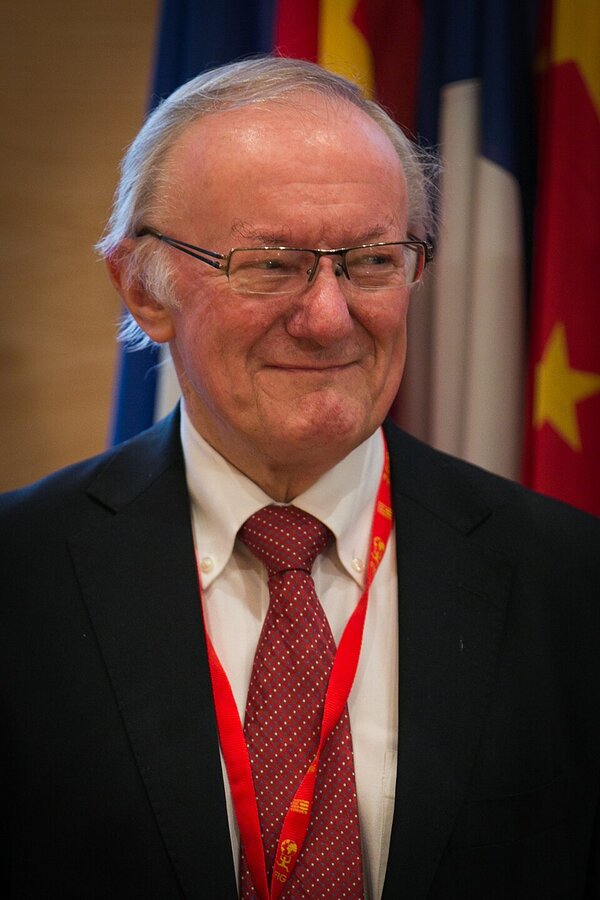
Pymouss, Wikimedia Commons, CC BY-SA 3.0.
Michael Batty, born in Liverpool on 11 January 1945, is Bartlett Professor of Planning at University College London and chair of its Centre for Advanced Spatial Analysis, which was set up when he joined UCL in 1995.1,2 He studied town and country planning at Manchester and taught at Reading and at Cardiff, and from 1990 directed the US National Center for Geographic Information and Analysis at Buffalo.1 He edits Environment and Planning B: Urban Analytics and City Science, and is a Fellow of the Royal Society and of the British Academy.1,2
His research has been on computer models of cities and their visualisation, beginning with aggregate land-use and transport models and moving, with Paul Longley's Fractal Cities, to the idea that city form grows from the bottom up through self-similar processes.1,2 Cities and Complexity, from 2005, places urban dynamics inside complexity theory. The New Science of Cities, from 2013, argues that flows matter more than locations for understanding and planning cities. Each won the William Alonso Prize of the Regional Science Association.1 Inventing Future Cities (2018) holds that the future of a city can be invented but not predicted.1
He co-edited Agent-Based Models of Geographical Systems and Urban Informatics, and the wiki's entry on CASA names him as its first director. He posts his lecture notes on his own site.3
- affiliation
- University College London
- role
- urban modeller
- homepage
- http://www.spatialcomplexity.info/
belongs to this organization or group
-
UCL research centre, founded in 1995, that applies spatial analysis, simulation and visualisation to cities and regions; its GIS course in R is open online.
makes
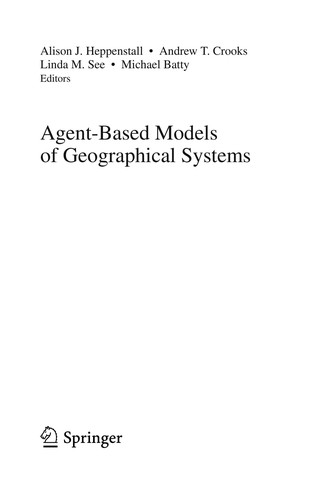
Edited volume from Heppenstall, Crooks, See and Batty, 2012, collecting the foundations, methods and applications of agent-based modelling of geographic systems.
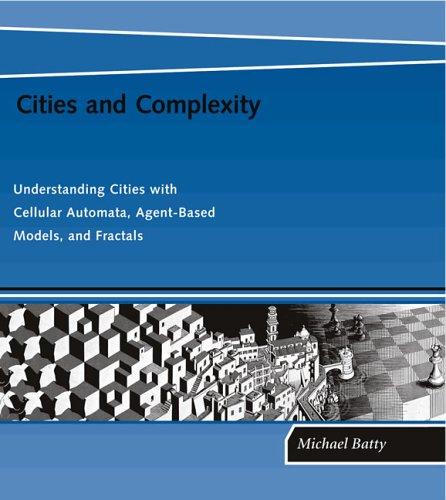
Michael Batty's 2005 account of modelling cities with cellular automata, agent-based models and fractals, the bottom-up methods under much of today's urban simulation.
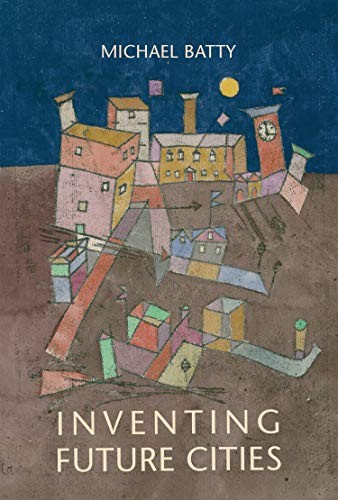
Michael Batty's 2018 book on why the future of cities can be invented but not predicted.
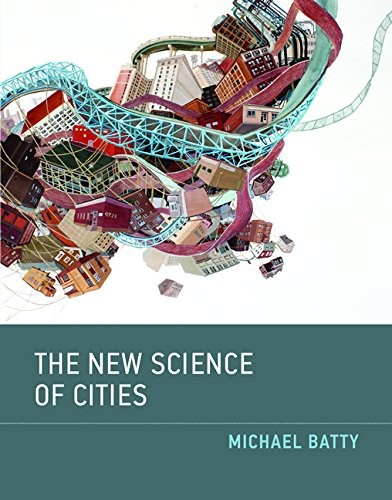
Michael Batty's 2013 argument that cities are flows and networks rather than fixed artefacts, with the models that follow from treating them that way.
-
Open-access edited volume from Shi, Goodchild, Batty, Kwan and Zhang, 2021, on the data, methods and infrastructure used to sense, model and run cities.
Tags: urban modelling, complexity, cellular automata, agent-based model