person · draft
David Gelernter
Yale computer scientist whose book Mirror Worlds described a live software model of a city or organisation, decades before the term digital twin.

Repdan, Wikimedia Commons, CC BY-SA 3.0.
David Hillel Gelernter, born on 5 March 1955, is an American computer scientist and writer who joined the Yale computer science faculty in 1982.1 In the 1980s he and Nicholas Carriero designed Linda, a system for coordinating parallel programs through a shared tuple space, which Bill Joy cited as the inspiration for parts of JavaSpaces and Jini.1 In 1993 he was badly injured by a mail bomb sent by Ted Kaczynski.1
His book Mirror Worlds predicted that small software programs would be joined by large public software works.2 Its chief example is the mirror world: a screen showing an image of your city with its traffic moving, or the state of a whole organisation at this second, through which people could explore the real thing in depth.2 He helped found Mirror Worlds Technologies, whose Scopeware software, released in 2001, used ideas from the book to organise a user's files; the company closed in 2004.1
The wiki's entry on Mirror Worlds covers the book, and the history of the digital twin starts with it.
- affiliation
- Yale University
- role
- computer scientist
makes
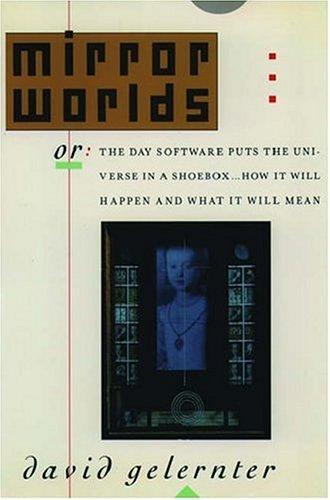
David Gelernter's 1991 book that first described software models of real places and institutions, fed by live data, that anyone could look into; the idea the digital twin of a place grows from.
Tags: mirror worlds, parallel computing, history