person · draft
Johan Rockström
Swedish Earth system scientist who led the team behind the planetary boundaries framework in 2009; joint director of the Potsdam Institute for Climate Impact Research.
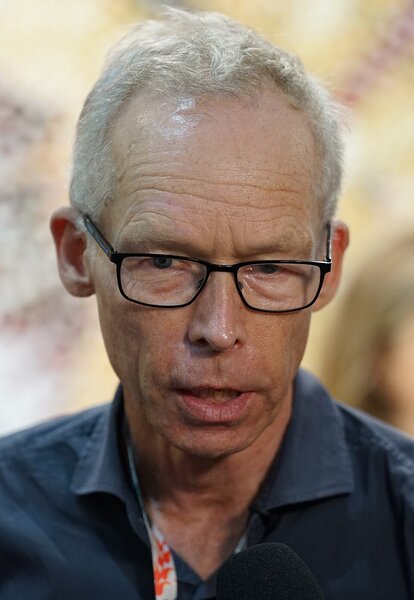
Xuthoria, Wikimedia Commons, CC BY-SA 4.0.
Johan Rockström, born 31 December 1965, is a Swedish Earth system scientist.1 He studied in Uppsala and Paris and took his PhD at Stockholm University in 1997. His early work was on water resources, land use and the resilience of social-ecological systems.1 He was executive director of the Stockholm Environment Institute from 2004 to 2012 and director of the Stockholm Resilience Centre from 2007 to 2018.1 Since 2018 he has been a director of the Potsdam Institute for Climate Impact Research, jointly with the economist Ottmar Edenhofer, and a professor of Earth system science at the University of Potsdam.1,2
In 2009 he led a group of 28 scientists who proposed the planetary boundaries framework: nine Earth system processes, among them climate and biodiversity, each with a threshold past which the risk of abrupt or irreversible change rises.1 An update followed in 2015, and later work has tried to translate the global boundaries into regional ones and to quantify how the boundaries interact.1 Critics have argued that the placing of several of the boundaries is arbitrary and that some have local rather than global consequences.1 He co-chairs the Earth Commission.1
He appears in the entries on the Stockholm Resilience Centre, which he directed, and PIK. He is a co-author of the 2026 state of the climate report, and his 2023 paper with colleagues on safe and just Earth system boundaries is one of the two flagship papers of the Earth Commission named in A just world on a safe planet.
- affiliation
- Potsdam Institute for Climate Impact Research
- role
- Earth system scientist
belongs to this organization or group
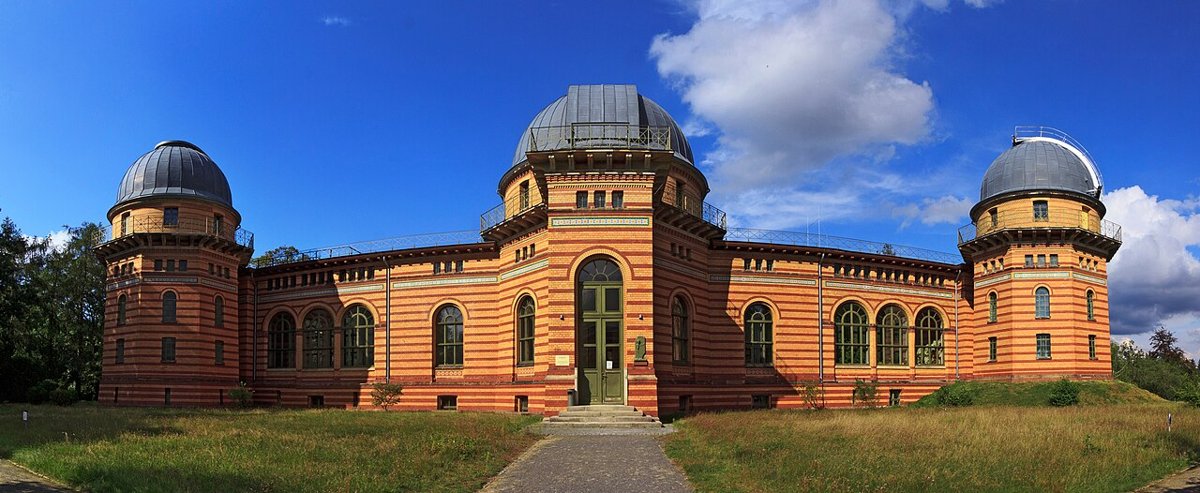
German institute, founded in 1992, that studies climate risks and pathways; it builds the REMIND, MAgPIE, LPJmL and SWIM models and co-founded the ISIMIP impact model comparison.
makes
-
Annual update of sixteen planetary vital signs by William Ripple, Christopher Wolf and colleagues in BioScience; in 2026 seven of the sixteen are at record extremes.
Tags: planetary boundaries, earth system, water