Living systems
Articles filed under living systems.
Essential
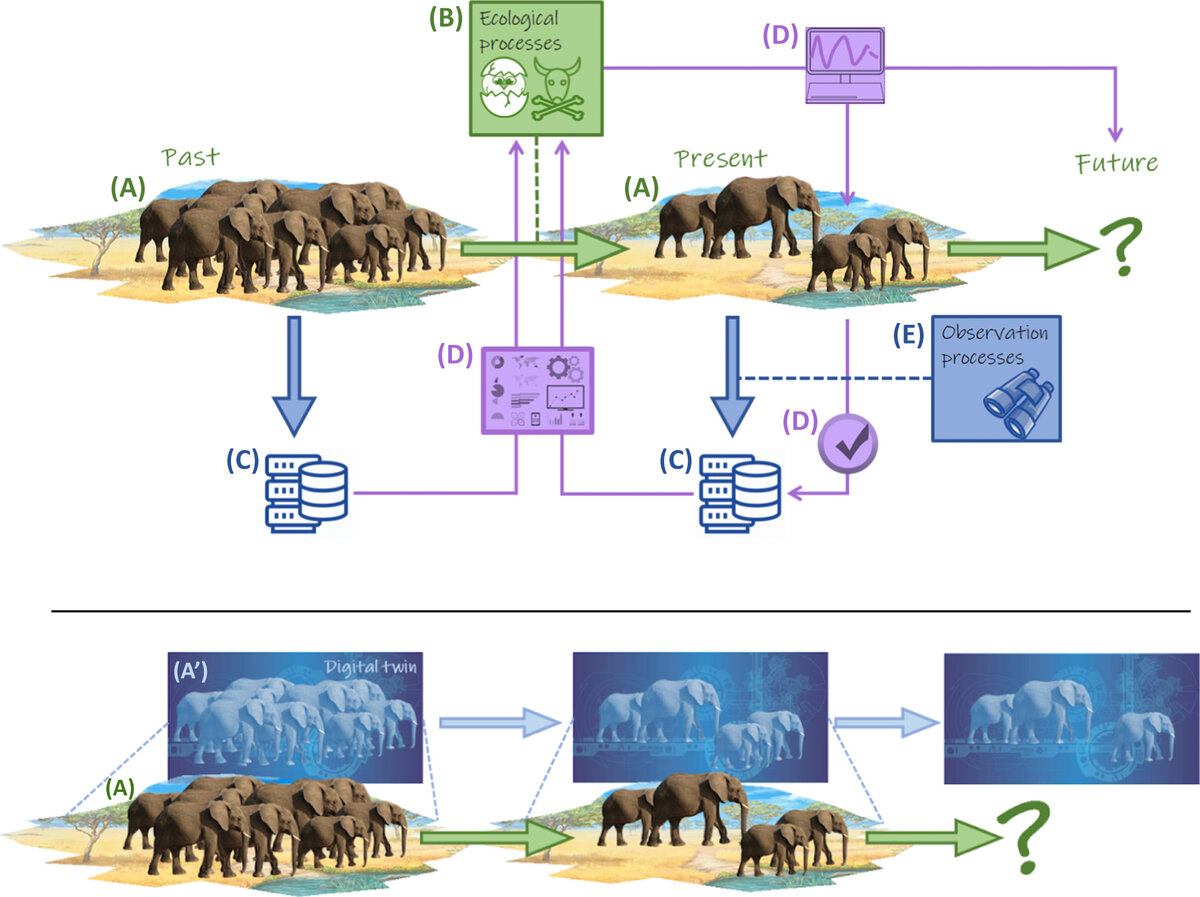
Eight ecologists and modellers set out what twins could do for ecology, five challenges peculiar to living systems, and four common misunderstandings, and urge people to start building prototypes.

Nineteen ecologists argue that ecology should forecast days to decades ahead, check each forecast against new data and update it, and say what that requires.
Solid
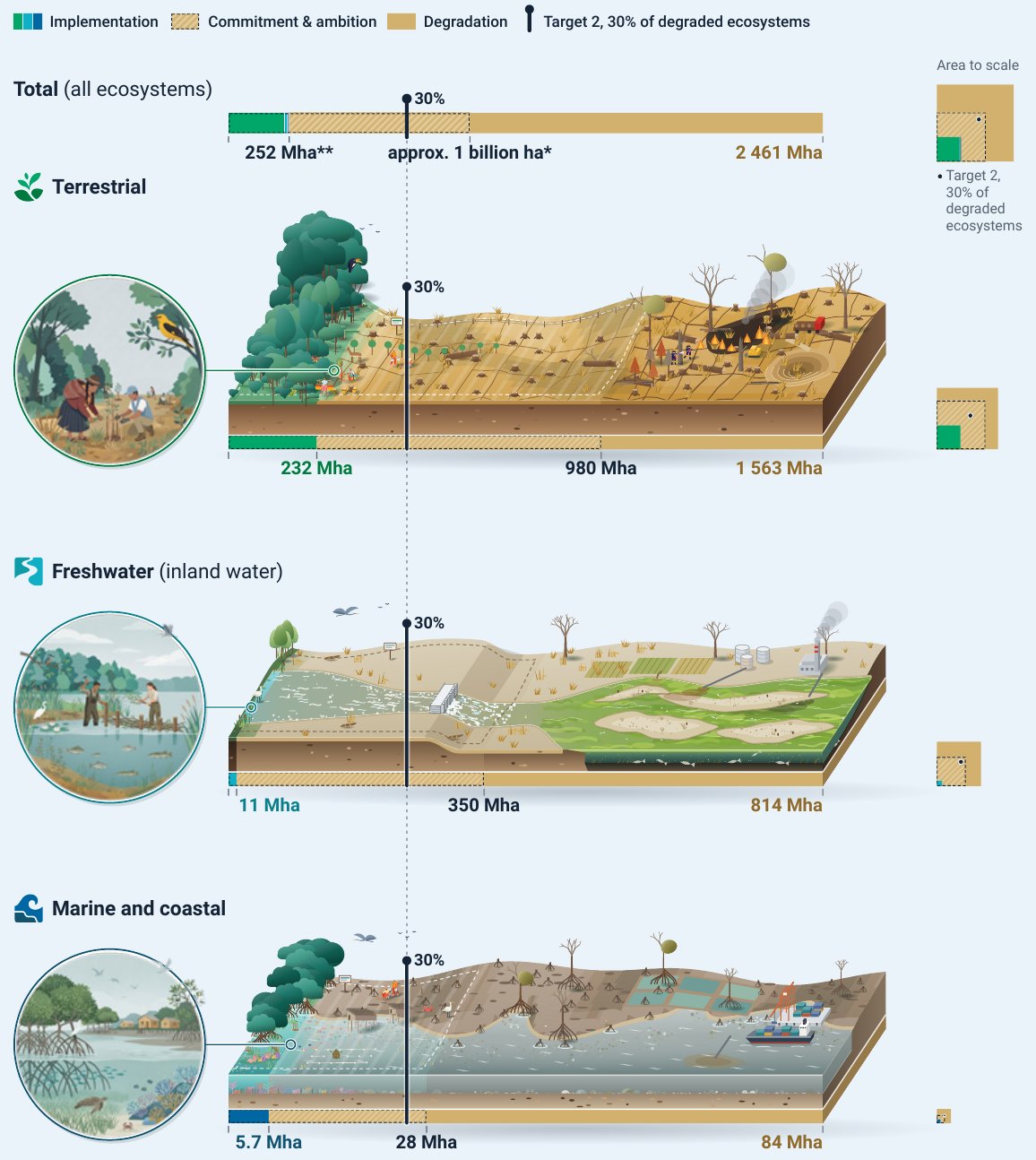
FAO, UNEP and the CBD Secretariat's 2026 count of restoration worldwide: 252 million hectares in 149 countries, mostly on land, against the commitments, the 30 per cent target and the money needed.
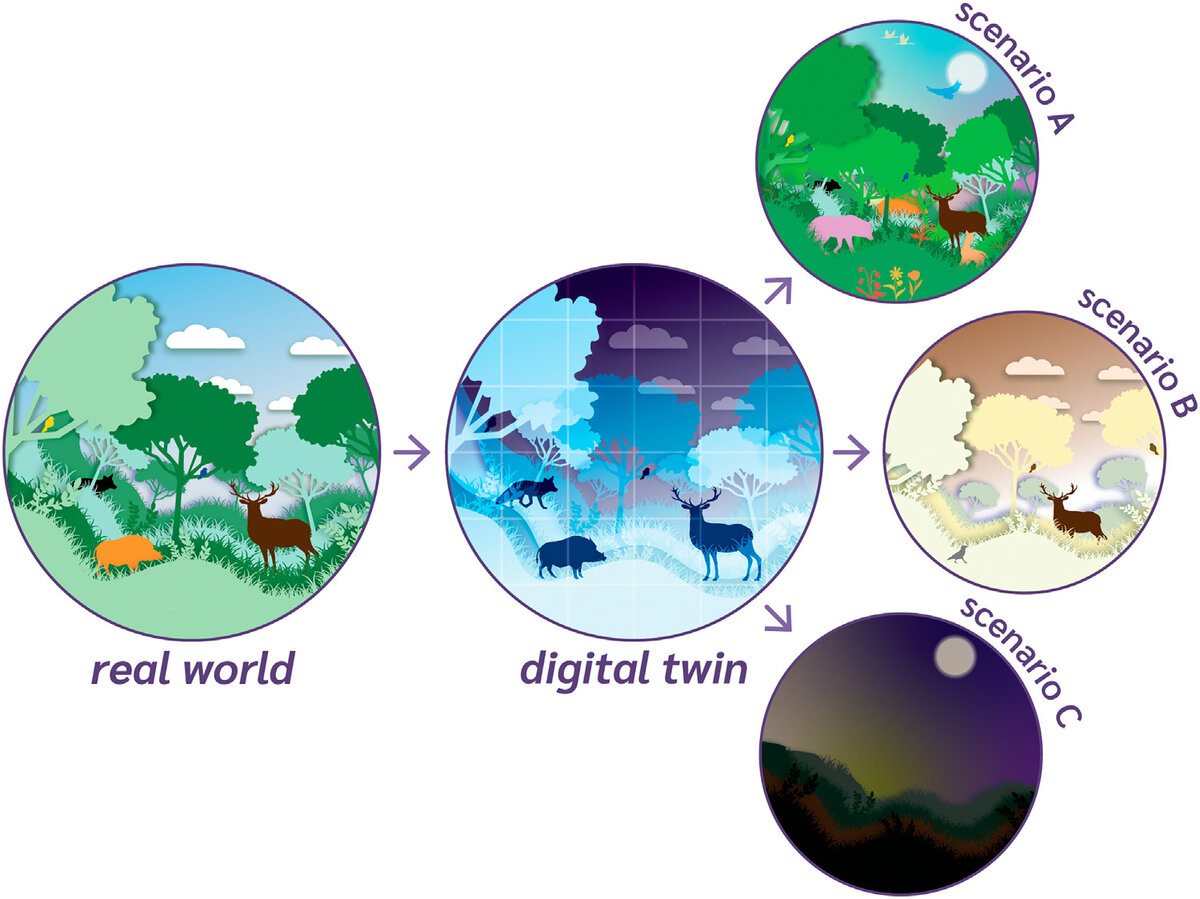
Fourteen Dutch ecologists and computer scientists name the five traits of an ecosystem twin and show how far existing studies are from having them all.
- Tropical forests are facing increasing risks of exposure to critical temperature thresholds article draft
PNAS study, July 2026, from EPFL: satellite canopy temperatures and range maps for 208 tropical tree species show forests nearing the critical temperature for photosynthesis.
-
Gordon Blair's short 2021 opinion piece asks whether a twin of the natural environment is just a model or just data assimilation, and sets out its building blocks as a "jam sandwich".
- A Review of Definitions, Data, and Methods for Country-level Assessment and Reporting of Primary Forest article draft
Discussion paper for the FAO by Brendan Mackey, Eloise Skinner and Patrick Norman of Griffith University on how primary forest is defined, mapped and reported by countries.
-
Fifteen tagged whales, a movement model that fits in a minute, and the Chilean government's daily vessel positions, combined into a map of where each fleet is most likely to meet a whale.
Of note
- A 73% average decline in wildlife populations: an overview of the 2026 Living Planet Index report article draft
Hannah Ritchie at Our World in Data on what the headline figure of the 2026 Living Planet Index measures, and on the wildlife populations behind its average.
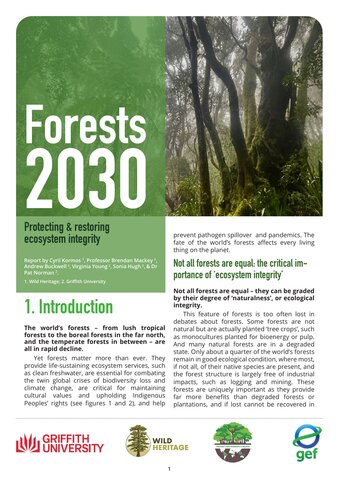
A nineteen-page explainer from Wild Heritage and Griffith University arguing that forest policy for 2030 should rest on ecosystem integrity, with a three-step order for protection and restoration.
- Mapping coastal forest retreat using convolutional neural networks and different satellite imagery article draft
A 2026 PLOS One paper that uses convolutional neural networks on Landsat and Sentinel-2 imagery to map 37 years of forest loss to ghost forest and marsh on the North Carolina coastal plain.
-
A review of 160 papers on reading the DNA that organisms leave in air, soil, groundwater and water, what it can detect, where it misleads, and how it might feed a model.
-
Satellite proxies for productivity, water, temperature and connectivity, compared inside and outside 119 UNESCO biosphere reserves: only 18 scored higher on all of them inside.
-
Columbia Insight report by Nathan Gilles on the US Forest Service's first national inventory of mature and old-growth forest, and why its maps are too coarse to find a single stand.